Where Do Foxes Sleep in the Wild and the Open?
Contents
- The Sleeping Habits and Behaviors of Foxes
- Dens
- Temporary Shelter
- Open Sleeping
- Where Different Fox Species in North America Sleep
- Red Fox (Vulpes vulpes)
- Gray Fox (Urocyon cinereoargenteus)
- Arctic Fox (Vulpes lagopus)
- Kit Fox (Vulpes macrotis)
- Swift Fox (Vulpes velox)
- Fennec Fox
- How Foxes Make Dens
- Entrance
- Tunnel System
- Nesting Chamber
- How Much Do Foxes Sleep?
- Conclusion
- FAQs
- Where do foxes sleep?
- Do foxes sleep in the same den every night?
- Can foxes sleep in urban areas?
- Sources
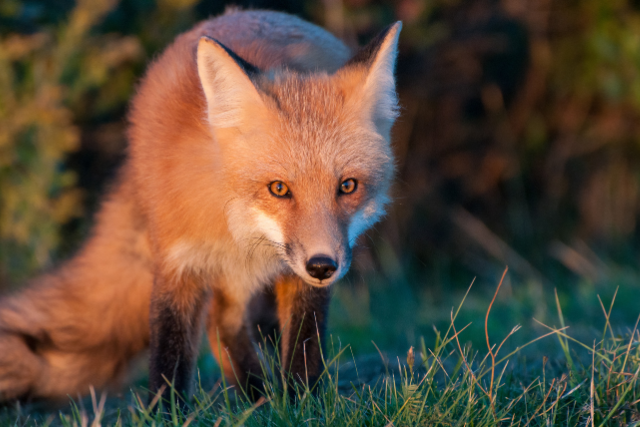
Foxes sleep in different places. Many people picture an underground den, but adult red foxes prefer to sleep in the open, even during winter, and use dens mainly as nurseries.
Their choice of sleeping location depends on the availability of shelter, safety, and their instincts.
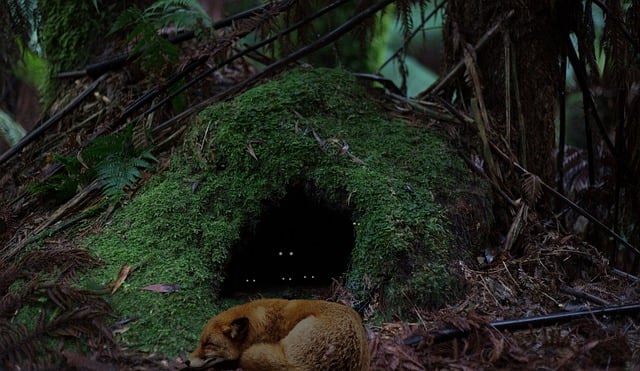
The process of selecting dens is also different. Red foxes may dig their own dens, but they usually remodel burrows abandoned by woodchucks or skunks. Gray foxes more often den in hollow trees, logs, and rock crevices.
So, where do foxes sleep in different seasons, and how do they dig dens? Let’s discuss these and other sleeping habits below.
The Sleeping Habits and Behaviors of Foxes
Here are the sleeping locations loved by various species. Later on, we discuss where each species sleeps.
Dens
These are burrows dug into the ground, often in a concealed location such as a hillside, under rocks, or in dense vegetation. Dens serve multiple purposes for foxes. For instance, they protect
Arctic foxes from extreme weather and predators like the polar bear.
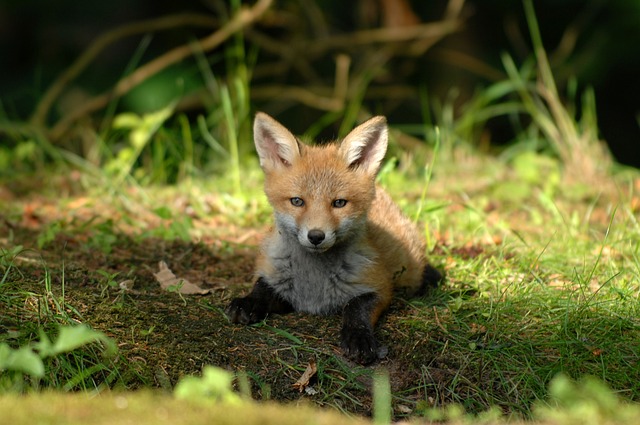
Further, these burrows are a secure place for raising baby foxes. Red foxes are particularly adept at creating dens, which can be elaborate with multiple entrances and tunnels.
Temporary Shelter
While foxes have their primary dens, they may also utilize temporary shelters like hollowed-out tree stumps and fallen logs. These temporary shelters offer a quick and convenient refuge, especially when foxes are on the move or during extreme weather conditions. Foxes also adapt to human environments and many call them urban foxes.
An urban fox isn’t a species but a wild fox roaming human settlements and calling it home. The behavior and adaptability of urban foxes can vary depending on the specific urban environment and the availability of resources.
While some people may appreciate the presence of these adaptable creatures in urban settings, others may have concerns about potential conflicts, such as damage to property or interactions with pets.
They’re most active during the night or twilight hours to avoid human activity. They feed on a diet that often includes scavenging for food scraps in garbage bins, raiding compost heaps, and hunting small mammals, birds, insects, and even urban rodents.
They may shelter in human-made structures like sheds, decks, abandoned buildings, or culverts.
Open Sleeping
Most of the year, adult red foxes sleep out in the open, curled up with their tails wrapped over their noses and feet. They may find a spot in tall grass, under dense shrubbery, or even in the open fields, relying on their natural camouflage and senses to remain alert to potential threats.
Sleeping in the open provides a quick escape route if needed. Red foxes often rest in thick cover on a wooded ridge or hilltop, where they can watch for danger.
Where Different Fox Species in North America Sleep
There are several species of foxes, each with its sleeping habits and preferences. Here’s a breakdown of these sleeping locations:
Red Fox (Vulpes vulpes)
Red foxes are highly adaptable and can inhabit urban areas, forests, or meadows.
In the wild, adults mostly sleep above ground and use underground dens to raise pups. However, red foxes may also use hollow trees, rock crevices, or burrows abandoned by other animals as sleeping sites. They may also rest in concealed locations like tall grass or dense vegetation.
The red fox creates multiple dens within their territory to provide shelter when raising their offspring. Breeding usually occurs during the winter months, and the female fox, or vixen, selects a secure and concealed den site to give birth to her pups.
After the young foxes are weaned and grow more independent, the family may move to other dens within their territory, demonstrating the red fox’s adaptability and ability to switch den sites to ensure their survival and the successful rearing of their young.
Gray Fox (Urocyon cinereoargenteus)
This species is unique among North American foxes because it’s an excellent climber. Therefore, it often sleeps in trees, choosing the safety of branches to avoid predators like coyotes. Tree hollows and cavities are also used, and gray fox dens have been found 10 meters up in the forest canopy.
If there are no suitable trees, they may still use ground dens like red foxes.
Gray foxes tend to be monogamous, and they breed from January to March. The denning location ensures the survival and development of the offspring while allowing the adults to exhibit their largely solitary and elusive behavior during their active hours.
Arctic Fox (Vulpes lagopus)
Arctic foxes shelter in dens dug in the ground, and they may burrow into snow during storms. Their underground dens can have 4 to 8 entrances and tunnels covering about 30 square meters, and some have been used for centuries. Such an infrastructure helps these foxes hide from predators and hunt.
Pups are born in spring and early summer in these earthen dens, which give the family a safe and insulated haven. The Arctic fox displays strong monogamous bonds during this period, with both parents actively participating in nurturing their offspring.
Kit Fox (Vulpes macrotis)
Kit foxes inhabit arid and desert regions in the southwestern United States. They dig extensive underground burrows for shelter and sleeping. These burrows often have multiple entrances and can be complex, providing a safe and cool place for adults and pups to rest during the day, as this species is nocturnal.
Swift Fox (Vulpes velox)
These small, nocturnal foxes live in grasslands and prairies of North America. Swift foxes are fast and agile, which helps them escape danger when necessary.
Breeding occurs between December and March, with the female swift fox giving birth to a litter of pups in her den, which she carefully tends to until they’re old enough to venture outside.
A concealed den site is vital for the swift fox’s survival, as it allows them to protect their vulnerable offspring and ensure their reproductive success while avoiding potential threats in their prairie and grassland habitats.
Fennec Fox
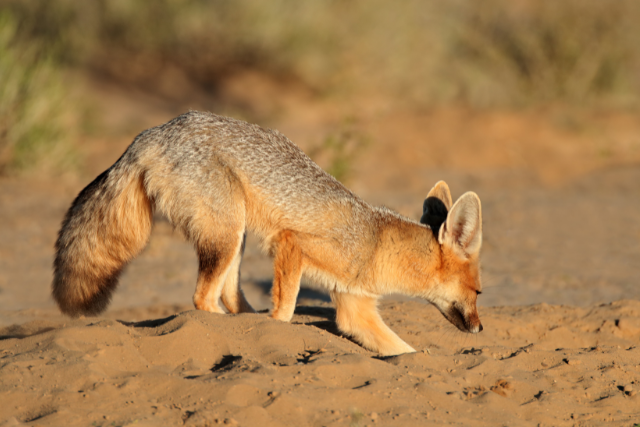
This small, desert-dwelling fox is most active during the night. During the intense heat in the Sahara Desert and other arid regions of North Africa, it avoids the scorching sun by seeking refuge in underground burrows that it digs or repurposes from other animals.
They insulate and line these burrows with soft materials like plant fibers to stay cool during the day and maintain their body temperature in the extreme desert climate. At night, they emerge to forage for food, which consists of insects, small mammals, and plants.
Fennec foxes often form monogamous pairs during the breeding season, and they may use burrows as nesting sites to rear their young, providing a secure and insulated environment in the challenging desert ecosystem.
How Foxes Make Dens
As mentioned above, a fox den isn’t just an opening in the ground. It’s a complex network of holes with different entrances. A fox den may extend over a large field, which makes it difficult for predators to find the chamber occupied recently. Here is a general overview of the design:
Entrance
Fox dens have a main entrance and one or more escape routes. While digging these holes, foxes conceal or hide the entry beneath vegetation to prevent predators from detecting it.
Tunnel System
Inside the den is a network of tunnels leading to different chambers. These chambers are used mainly for raising young. Foxes store extra food in shallow caches outside the den rather than inside it.
Nesting Chamber
A central chamber in the den may serve as a home for raising fox cubs. Its lining comprises soft materials like leaves, grass, or fur, providing a comfortable and insulated environment for the young.
Spotting fox dens can be challenging, as they are typically well-hidden, and their entrances are inconspicuous. Foxes are also secretive animals that avoid human activity. To increase your chances of finding a fox den, consider looking for tracks, scat, or evidence of recent digging near potential den sites.
However, it’s essential to observe foxes from a distance and not disturb them, especially during the breeding season.
How Much Do Foxes Sleep?
Foxes are crepuscular animals, which means they’re most active during dawn and dusk. Their need to hunt for food and avoid predators influences their sleeping patterns. Hence, they don’t adhere to a strict sleep-wake cycle like humans. Instead, foxes have a more flexible and adaptive approach to sleep.
There is no reliable figure for how many hours wild foxes sleep. Their rest is not continuous and is usually broken into several naps, mostly during the day. They often sleep after a meal to conserve energy and become active when they need to hunt or scavenge for their next meal.
During the breeding season or when raising young foxes, female foxes may sleep less because they need to care for their cubs.
Male foxes also become more active during this time, as they bring food to the vixen and pups.
Since foxes are adaptable to various environments, including urban areas, their sleep patterns can adjust to the presence of humans and other disturbances. Therefore, in urban settings, they might be more nocturnal to avoid human activity during the day and scavenge at night when it’s quieter and less risky.
Conclusion
Foxes in North America exhibit flexible sleeping habits and utilize a variety of shelters and strategies depending on their environmental conditions and life stage. Their adaptability and resourcefulness enable them to thrive in diverse habitats.
Most foxes use dens dug in the ground, with multiple entrances and chambers, to raise their young. Outside the denning season, adult red foxes usually sleep in the open.
Foxes are active year-round, relying on a combination of physiological adaptations, behavioral changes, and hunting abilities to survive winter. Dens give the young a safe place to hide from predators.
FAQs
Where do foxes sleep?
Adult red foxes usually sleep in the open, curled up in thick cover. Foxes use underground dens, hollow trees, rock crevices, or abandoned burrows of other animals mainly when raising pups or sheltering from bad weather.
Do foxes sleep in the same den every night?
Not really. Foxes have several resting spots and often more than one den within their territory, and a vixen will readily move her pups to another den if disturbed.
Can foxes sleep in urban areas?
Yes, foxes have adapted to urban environments and may use hidden spots like gardens, sheds, or storm drains as makeshift dens when natural den options are limited.
Sources
- Red Fox (Vulpes vulpes), Minnesota Department of Natural Resources
- Red Fox, SUNY College of Environmental Science and Forestry
- Urocyon cinereoargenteus (gray fox), Animal Diversity Web, University of Michigan
- Vulpes lagopus (arctic fox), Animal Diversity Web, University of Michigan